


Looking for a Trainer? You Might Actually Need an Exercise Physiologist

There is no doubt that thousands of Australians try personal training, strength coaching, or injury rehab and give up when it doesn't work. It happens because the approach wasn't matched to their body, as a generic program can't account for a chronic condition, injury or disability. That's exactly where exercise physiology is different. An EP doesn't hand you a program; they prescribe one, built entirely around your medical history and your condition. So, we have made this guide just for you, breaking down everything you need to know. Read it through, and if it clicks, book a consultation with The Movement EP before you try another approach that wasn't built for you!
Understanding Exercise Physiology: When You Need More Than a TrainerAn Exercise Physiologist (EP) designs personalised, clinically informed exercise programs based on your health history, injuries, and physical limitations. They help manage chronic conditions, support recovery, and improve strength safely when generic training or rehab hasn’t worked. This approach bridges the gap between medical care and fitness, ensuring exercise is both effective and appropriate for your body. |
The Search That Brought You Here
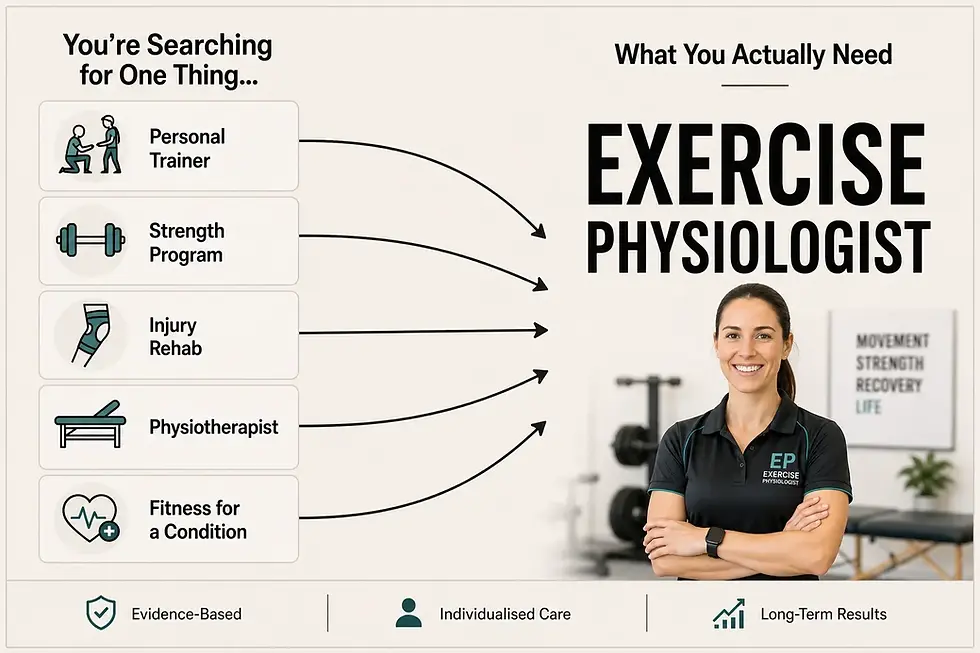
“You're Searching for One Thing. You Need Another.”
People land on Exercise Physiology from all kinds of searches. Here's what they were looking for and what they actually needed:
I Need a Personal Trainer
Looking to get fitter, stronger, or lose weight, but at the same time, you have a chronic condition, injury history, or ongoing pain that makes a generic gym program unsafe. So, in that case, a PT isn't trained to handle all of that. Guess who is? An EP is!
I Need a Strength Program
Every time you push hard, something flares up in the body. Well, you don't need more reps or a new app; you just need a clinically designed program built around how your body actually responds.
I Need Injury Rehab
After an injury rehab, your physio cleared you, but you still don't feel right, and nobody told you what comes next. That exact gap between discharge and full function is where an EP steps in.
I Need a Physiotherapist
Your issue isn't acute. It's been lingering for months, maybe years. Hands-on treatment hasn't resolved it in the long term. That’s why what you need now is clinical exercise management, not another round of manual therapy.
I Need a Fitness Program for My Condition
The GP said exercise is important. But the appointment ended without a plan. So, an EP takes that advice and turns it into something specific, safe, and actually built around your diagnosis.
Research Spotlight: A 2023 qualitative study published in a peer-reviewed journal interviewed practicing accredited exercise physiologists across Australia. It was found that one of the biggest barriers to accessing EP care was a simple lack of awareness, like patients didn't know the profession existed, and even some health professionals weren't clear on what an EP could do. |
What Is Exercise Physiology?
Exercise physiology is the clinical use of exercise as medicine. An accredited exercise physiologist holds a 4-year university degree, is registered with ESSA, and is recognised under Medicare, DVA, NDIS, and WorkCover and CTP.
Unlike personal training, an EP works with people who have conditions, injuries, or health histories that require more than a standard fitness approach. The EP also focuses on long-term exercise rehabilitation rather than short-term hands-on treatment, which sets them apart from physiotherapists.
In shorty you can think of it as a profession that sits in the clinical space between a gym and a hospital, and most people who need it don't know it exists until they find it.
Who Exercise Physiology Is For
If these sound familiar, then you definitely need an EP:
You want to train, but every program you've tried aggravates an old injury.
The doctor recommended exercise, but nobody told you what's actually safe for your body.
Dealing with diabetes, heart disease, osteoporosis, arthritis, or cancer, and need exercise prescribed and not guessed.
Physio discharged you, but your body is still not back to full strength or function.
You have chronic pain that hasn't responded to rest, massage, or generic training.
After giving birth, you want to rebuild strength and mobility safely with a proper postpartum exercise program.
You're recovering from surgery, and the gap between "medical" and "back to movement" feels enormous.
A personal trainer has told you your situation is outside their scope.
What Changes When You Work With an EP
You Get a Complete Clinical Picture First
An EP doesn't start with your goal or your injury; in fact, they start with everything. Medical history, medications, functional limits, and how your specific condition interacts with exercise. All of this shapes your program before a single rep is prescribed.
You're Covered Through Medicare, NDIS, DVA, and More
Eligible clients can access Medicare-subsidised sessions through a GP referral, with additional funding available through NDIS, DVA, and WorkCover, depending on your situation.
Every Provider You See Is on the Same Page
The EP works alongside your GP, specialist, or physio and not in isolation. This kind of coordination means your exercise program supports your broader treatment, rather than accidentally working against it.
The Body Actually Starts Responding the Way It Should
Once exercise is matched to your body, the shift is noticeable. You will experience that pain settles, energy returns, strength builds without flare-ups, and the condition you've been managing starts feeling far more controllable.
This is why people who have tried personal training, physio, and every fitness program available, and felt like exercise just doesn't work for them, finally get results with an EP.
Stop Searching. You've Found It.
Hence, it must be clear to you by now that if your personal training, strength coaching, rehab, or managing a health condition did not work and brought you here, then you're in the right place. Our team at The Movement EP starts your first session with a full clinical consultation. Then we look at your whole picture and build from there.
So, all set to learn why an EP is different? Come, let's do it together!
Frequently Asked Questions
What Conditions Does Exercise Physiology Treat?
EPs work across diabetes, heart disease, osteoporosis, cancer, chronic pain, mental health, neurological conditions, post-surgical recovery, and musculoskeletal injuries.
How Many Sessions Will I Need?
It fully depends on your condition and goals. Our team at The Movement EP will outline a recommended plan after your initial assessment, with progress reviewed regularly.
Can I Still See an Exercise Physiologist If I'm Not Injured or Sick?
Yes. EPs work with people who are healthy but want to train more effectively, particularly if previous programs have led to repeated setbacks.
Do I Need to Be Fit Before My First Appointment?
No, and this is a very common reason people delay booking. Your EP designs the program around where you are right now, not where you think you should be.
My GP Told Me to Exercise, but Didn't Give Me a Referral. Can I Still See An EP?
Absolutely. You don't need a referral to book privately. A GP referral is only needed if you want to use Medicare subsidised sessions.




Comments